Marketing Automation

Marketing Automation for your Business

Drive more sales opportunities from your leads

By creating goal-based campaigns using marketing automation to keep your business and your leads on track, you can focus on the behavior, needs and interests of your individual prospects and leads to better their experience with your brand and their desire to convert.

It’s all about relevance

Focus your efforts on the right people who matter to your business and transform them into customers. The goal is to reduce the waste of marketing campaigns and strengthen the channels that drive the most leads and sales.

Attract and convert new leads using marketing automation.

We live in the greatest era of technology, giving us the ability to employ and implement marketing automation technology that can improve your view into the marketing and sales funnel of your organization. Typically, once implemented, you will begin to see extraordinary insights into your marketing and sales practices–and ways to improve them.

Centralize your marketing database and gain better business insights.

  • Lead generation
  • Goal-based workflows
  • Email marketing
  • Segmentation and personalization
  • Life-cycle marketing
  • Content strategy
  • Analytics surround the entire funnel
  • Website integration
  • Call tracking

Monitoring your marketing performance. Improve your success online.

  • Instantly know whether someone is a follower, prospect, lead or customer
  • Grade your leads’ performance to better position them for sales
  • See how influential your social media prospects are
  • Segmentation and personalization
  • View a record of your entire communications stream to a lead in one place
  • Understand what works and what does not work

Determining ROI lifecycle tracking analytics

  • Track behavior through customer life-cycle
  • Track the actions of anonymous prospects
  • Build clear and robust lead profiles
  • Strength best-performing channels
  • Get cost-per-acquisition data

6 Marketing Mistakes Made by Small Business Owners

6 Marketing Mistakes Made by Small Business Owners

When it comes to small business marketing, most people make the mistake of confusing advertising alone with marketing. And while advertising certainly is a part of marketing, it’s not all of it. Big business understands this, yet they don’t always do it correctly either.

Marketing starts with the customer, the target market. In order to put the odds in your favor when it comes to having a successful ad, you must first understand who you are marketing to and what problem they have that your product or service can solve. Once you know this, only then you can begin to craft a marketing message that will have the best chance of connecting with your market. The fact is that your market does not care at all about you or your company. They only care about how you or your company can help them.

If entrepreneurs and small business owners do not market themselves, chances are they won’t be in business for long.  Here are 6 common mistakes business owners may overlook or struggle with when marketing themselves:

  1. Thinking that one ‘touch’ will always garner results.  I have recently been in conversations with a business owner who runs a workshop, and after one mailing to roughly 300 people he believes direct mail doesn’t work because there was only a couple responses.  I have been trying to help him understand that his first mailing didn’t even cause a blip in the brains of those who even saw it.  I encouraged him to narrow his mailing list and to “mail the heck out of them.” (I think that’s roughly the language I used).
  2. Thinking that one kind of marketing is going to do the trick.  Today, there are so many different options and avenues for a marketing approach, we need to consider all of them and determine how they can work together.  Direct mail, email, articles that draw people to our websites, social media, face-to-face, ‘stuf’, word of mouth…it’s ALL important and very few entrepreneurs can go with only one type.
  3. Not understanding that you need to build your ‘list’.  If you only have 6 people or so to whom you are marketing to, they had better be pretty darn responsive or you’ll starve!  Building a list through opt-in methods is the way to go and it’s part of why it’s smart to offer products (digital, for example) for free.  People come to your website, find what you offer to be helpful, download it, take the tele-seminar (or whatever), and if they like what they receive, they “hang our” for awhile.  They hope is that they will continue accessing some other products or services.  Someday…they’ll buy…or at least that’s the idea.  You are running a business, and if nobody buys, you’re not going to be in business for long
  4. Not budgeting time to do all the marketing activities that need to be done.  When it comes down to it, Marketing IS Selling.  And as the owner of your business, you’re the subject matter expert and should be the one selling (in this case marketing) it to potential new customers.  It’s extremely short-sighted to say you don’t have time to market.  If you don’t MAKE time to market, you’ll soon have nothing but time because you’ll be out of business.  Remember, you do not have to do it all yourself.  Tap into the expertise that is out there allowing you to concentrate on growing the business.  Assuming you’re not in the startup stage, at least 80% of your time should in some way be spent selling to new customers.  Don’t get caught up doing the busy work if at all possible.
  5. Not paying attention to marketing intervals and frequency.  For any channel (i.e. direct mail, text message blast, social media etc.), if you send out something 15 times but over 15 years, you won’t have much – ney, any – impact. Your marketing needs to be frequent but also done within a short enough time frame that people remember and think, ‘oh, yeah I think I’ve seen this person/service/business before’.
  6. Not realizing that you are either going to spend money or time, but most likely both.  You can’t market without some form of investment of your capital – either $ or time.  Target your message and your efforts so you don’t dilute your impact.

See if you are making any of these mistakes – and if you are, take steps this week to start correcting them.  It will be perilous to your business if you don’t.


How to Generate Business with Pay-Per-Call Marketing

HOW TO GENERATE BUSINESS WITH PAY PER Call MARKETING

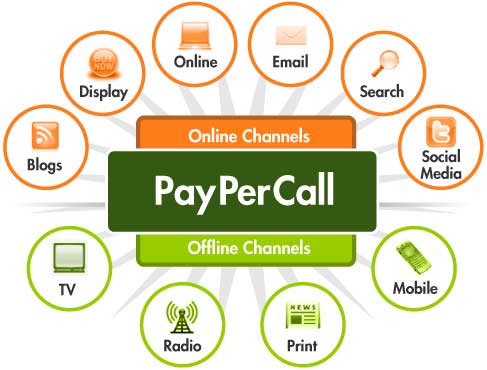
Experts suggest that business’s conversion rate through phone leads is higher than with data leads. So nowadays, the pay-per-call marketing concept is gaining huge public response. Under this scheme, advertisers & merchants pay only for qualified inbound phone calls. Theoretically, pay-per-call or click-to-call is quite similar to pay-per-click(PPC). But unlike PPC, it offers an alternative for companies who do not have transactional websites or the time to respond to emails. It works on auction pricing & encourages the potential clients to call instead of click.

In pay-per-call technology, phone calls pass through an IVR (interactive voice response system). It iѕ like performance based marketing process. Affiliates, vendors, or merchants assume responsibility for performance as opposed to an advertiser taking full responsibility (as is the case with CPM or flat media buys). Now, let’s have a look at how it approaches this:

  • Toll free or your local numbers is provided to the vendors and affiliates by the advertiser, who has comprehensive tracking and call detailing services.
  • In the pay-per-call medium, visitors/users simply click the ‘call me now’ button on your advertisement and then are directly connected to your business.

According to a recent survey, only 71% of small businesses have their own website. So, 29% are missing out on local search marketing, which has revolutionized the way consumers are finding their day-to-day services. Luckily, here comes the alternative as ‘pay-per-call advertising’. It’s a smart algamation of search functionality & on the phone interation. Eventually, it turns into an appealing marketing opportunity for businesses, especially small to medium sized businessses, even those which do not have a website.

In practice, it’s quite simple to understand that making a call to a local business is faster and more reliable than relying on an email to be answered regarding product availability, pricing or other details.  Experts believe that those performing local searches are actually not the traditional searchers.  They simply wish for a quick interaction to answer their question so they can make a decision, making a quick call the better option instead of emailing.

Pay-per-call is a very simple strategy to execute.  You need to first define relevant key terms your customer uses to find your service, choose desired categories that fit your business and finally specify the geographic areas where you want to publish your advertisement.  You also obviously have to create your ad, to include the basics about your company (i.e. name, address, a short description & a track-able number).  The goal is to use short succinct key selling points on what you offer.  Your objective is to clearly get across what you’re offering, in the most appealing way possible in order to entice the reader to make the decision to call.  Undoubtedly, it tends to be a much simpler and quicker than it’s digital marketing alternatives.

Pay-per-call can be one of the most cost effective modes of maximizing online advertising revenue.  For a small business, it is a wise choice as it expands potential reach, offers targeted marketing, is cost effective and can increase sales conversion rates.  For larger businesses, it unfortunately can be a forgotten piece of the pie that can contribute to your overall marketing plan by grabbing that low hanging fruit.

The benefits of pay-per-call are obvious.  As a targeted marketing medium, it establishes contact with customers when they are interested in the product and are in a buying mindset.  It also allows the company to increase customer touch points as the ubiquity of mobile phones has ensured an ad is always within arms reach.  In addition, it’s remarkable how it allows the company to better manage the sales process with its direct method of communication.  The increased speed of the purchase process is dramatic as with the touch of a button, a salesperson is now on the line.

Here are a few other reasons why we believe Pay-Per-Call is not only important, but a driving force for the future of marketing.

bullet_1

Inbound calls are vital for local businesses

Nothing offers a better conversion rate of turning a lead into a customer than actual calls coming in.  Because these are leads already interested in your product/service, it’s simply up to you to explain the benefits and close.  It’s much more difficult to say not to a salesperson in person or over the phone vs deleting an offer you get in an email.  Not saying there isn’t value in email marketing, just that the value of inbound calls is greater than emails because they have a quicker and better ROI.

bullet_2

Pay-per-call is trackable

This means that you can access call tracking platforms that help measure all inbound calls driven from your marketing initiatives.  The system basically offers total transparency, even when SEO services such as PPC are in place.  The measurable and direct accountability of the system makes them a better more reliable choice for almost any type of business trying to drive more inbound sales.

bullet_3

They offer simplicity for the business owner/manager

This is because pay-per-call ads make it possible for clients to know how much they get billed as calls are completely tracked, and if you need to slow down the amount of inbound calls, you can simply adjust your spend accordingly.  Once you have a good system in place, it’s almost as simple as turning up or down the thermostat.  As an agent, this makes it easier to show exactly how your marketing efforts helped/affected your clients business.  They spent $X with you, and you were able to drive Y amount of inbound phone calls.  With traditional advertising and marketing, they may spend $X with you, and you provide them a TV or radio ad, but there’s not evidence that your efforts actually benefited their business’ sales revenue.

Cheryl_copywriter icon
Cheryl Breaux
 
Cheryl works on SOCON’s customer success team to help advise startup-s to make successful decisions to get to the scale & growth stage! She’s a happily married mother of three (including twins!), and in her spare time, you’ll likely find her golfing or writing children’s books.